Last Updated on October 8, 2026
Seedling Problems Chart: Leggy, Yellow, Purple, Falling Over
Most seedling problems come back to four things: light, water, temperature and time in the pot. Leggy seedlings need the light closer, seedlings that fall over at the soil line have damping off, yellow seedlings are often too wet or out of food, and purple leaves are a stress sign, often from cold. Find your symptom in the chart, then read its section for the fix.
Every fix here is a change to how you grow: light height, air movement, bottom watering, clean mix, temperature and potting up. No sprays.
Seedling problems chart
| What you see | Likely cause | Fix |
|---|---|---|
| Tall, thin, pale stems leaning toward a window | Not enough light, or too many seedlings in one cell | Tube or shop lights 2-4 inches above the tops (strong LED panel: check it with the DLI calculator), 12-16 hours a day, one seedling per cell |
| Stem pinched and thread-like at the soil line, seedling falls over | Damping off, favored by cool, wet mix | Infected seedlings will not recover. New sterile mix with no compost, 70-75°F mix, water less |
| Whole seedling droops from the top while the mix is wet | Too much water, roots short of air | Let the top nearly dry, then bottom water and drain the tray |
| Yellow leaves, slow growth | Waterlogged mix, or the seed mix has run out of food | Fix watering first, then pot up into a mix with compost |
| Purple stems or leaf undersides | Stress: cold, crowding, light or nutrients | Keep the air above 60°F, warm the mix, do not start too early |
| White fuzz, green film or tiny flies on the mix | Surface staying wet, dome left on | Dome off once seeds sprout, bottom water, run a fan |
| Seeds never came up | Old seed, cold mix, or planted too deep | Germination test, 70-75°F mix, surface sow seeds that need light |
| Scorched leaves after a first day outside | Sun or wind scorch, not hardened off | Harden off over 10-14 days, start in shade |
| Roots circling the cell, growth stalls | Outgrew the container | Pot up into a container 1-2 inches wider |
Causes and fixes are from the University of Minnesota, University of Illinois, Penn State, University of Maryland and University of Wisconsin extension guides linked in each section below, plus my own seed starting guides.
Leggy seedlings
Leggy seedlings are not getting enough light. Keep the light no more than 4 inches above the tops, with 2 inches ideal, for 12 to 16 hours a day, and turn it off at night, since many plants need a dark period. That setup is from University of Minnesota Extension’s seed starting guide, which calls lack of light the major cause of long, skinny stems. My 10-step seed starting guide uses the same 2-4 inch, 12-16 hour setup.
- Thin to one per cell. Crowded seedlings compete for light and get leggy. Old fluorescent tubes also lose brightness, so replace tubes you have used for several years (Illinois Extension).
- Expect some crops to stretch more. Tomatoes and the cabbage family stretch easily, while peppers, eggplant and lettuce stay compact (Maryland Extension).
- Add air movement. A fan blowing on the seedlings thickens their cell walls for a stronger stem, and gently running your hand over the tops each day works the same way (Wisconsin Extension).
- Bury the stretch when you pot up. Most of the stem can go below the mix in the bigger container (Maryland). Tomatoes root along any buried stem, as my tomato transplanting guide notes.
If you use a strong LED panel instead of tubes, check what it actually delivers with the DLI calculator.
Damping off: seedlings that collapse at the soil line
Damping off is a seedling disease that rots the stem where it meets the mix. Seed leaves turn water-soaked and mushy, the stem goes thin and almost thread-like where infected, and under high humidity you may see fluffy white cobweb growth (University of Minnesota Extension’s damping off guide). Once a seedling is infected, nothing can be done, but seedlings with true leaves and a bigger root system are far less likely to be hit (Illinois Extension).
So this one is all prevention. Penn State Extension’s damping-off fact sheet lists the conditions that favor it: too much soil moisture and heavy overhead misting, soil below 68°F before the seeds sprout, soil above 77°F after they come up, and crowded flats.
- Sow in new, sterile mix. Do not reuse potting mix, and do not fill seed trays with garden soil or compost, since the disease can be in them (Minnesota and Illinois).
- Start over clean after an outbreak. Throw out infected seedlings and their mix, then wash the containers and tools (Maryland).
- Warm the mix to germinate. A heating pad under the trays holds the mix at 70-75°F. Water with 68-77°F water, since 50°F water slows growth and raises the chance of infection (Minnesota). Keep the heat mat off the light timer too (Minnesota’s seed starting guide).
- Water less, from below. My step-by-step seed starting guide warns that overwatering leads to damping off and takes the cover off after germination for the same reason.
- Keep air moving. A fan helps protect seedlings from damping off (Wisconsin).
A note on compost mixes. My seed starting guides use Coast of Maine seed starting mix, which contains compost, and my soil block recipe includes a compost blend. The extension guides above keep compost out of seed trays. If damping off keeps showing up, sow the next round in a seed starting mix with no compost and save the compost mixes for potting up. Maryland’s guide says a high-quality screened compost mixed 50-50 with a soilless mix works for growing transplants.
Seedlings falling over from the top
A seedling that tips over from the top while the mix is wet is usually overwatered, not dry. University of Minnesota Extension’s troubleshooting post for commercial vegetable growers calls this epinasty: waterlogged roots run short of oxygen, the plant makes ethylene gas, and the leaves droop. It looks like thirst, so the common reaction is to water more. Leggy stems make it worse, since stretched seedlings can collapse with even a little over or under watering (same post).
- Wait until the top of the mix is nearly dry before you water (Maryland).
- Bottom water: pour water into the tray and let the cells soak it up through the holes, as my 10-step guide does, then drain whatever is left standing (Minnesota).
- Do not water on a schedule. Newly emerged seedlings have small roots and usually do not need water every day (Illinois).
Yellow seedlings
Check the water before anything else. A waterlogged mix starves roots of oxygen until they start to die back, and the plants look wilted (Illinois Extension). If the mix is fine and growth has been slow, the seedlings may simply be hungry. Slow growth with yellow leaves likely means a nitrogen shortage, and onions and cabbage family crops show it first (Minnesota’s vegetable grower post).
Timing matters here. Most potting mixes carry enough fertilizer for about 5 to 6 weeks of seedling growth (Maryland), and seedlings do not need feeding until they have several sets of true leaves (Minnesota). Past that point, the cultural fix is a richer mix. Maryland says screened compost mixed 50-50 with a soilless mix adds nutrients for transplants, so pot the yellowing seedlings up into that and give them the light they need.
Purple leaves on seedlings
Purple stems and leaf undersides are a stress signal, and cold is the cause you can most easily fix. In an Ask Extension answer on tomato seedlings, University of Maryland’s Home and Garden Information Center says some purpling is very common in tomato transplants grown under lights. It can come from nutrient levels, temperature swings, light, humidity, crowding or poor airflow, and cool conditions can keep plants from absorbing phosphorus. Plants typically grow out of it once they are in the garden, and the answer advises against feeding unless the plants are also yellowing after at least 8 weeks in the same mix.
- Keep the room warm. Keep the air above 60°F. The mix in indoor containers can run as much as 5°F colder than the air (Minnesota).
- Skip cold days outside. Time outdoors on cool days is one of the triggers in Maryland’s answer, so save hardening-off trips for warmer days.
- Do not start too early. Starting tomato seeds only about 5 to 6 weeks before they go outside avoids the stress of a long stay indoors and cuts down on stretching (Maryland’s answer). The Plan My Garden planner starts tomatoes indoors 3 to 5 weeks before your last frost and sets them out 2 to 3 weeks after it.
White mold, green film or gnats on the mix
Growth on the surface of the mix means it is staying too wet. Algae and fungus gnats on the growing media are signs it is too wet, so cut back watering and let it dry out (Illinois Extension). None of the extension guides cited here covers white fuzz on the surface by itself, so treat it as the same too-wet warning. White growth on the stems of collapsing seedlings points to damping off instead.
- Take the dome or plastic off as soon as seeds sprout, as my 10-step guide does.
- Switch to bottom watering so the surface can dry.
- Run a fan. Fungus gnats show up on wet, exposed soil, and a fan for ventilation helps (Minnesota’s vegetable grower post).
Seeds that never came up
The usual causes are old seed, seed planted too deep, and mix that is too cool (Illinois Extension). Most seeds germinate best with the mix around 70-75°F. Some, such as lettuce and dill, need light to germinate, so press them onto the surface instead of burying them. My germination temperature chart shows how much cold costs you: tomato seed takes about 6 to 8 days within its 65-85°F range, and over 40 days at 50°F.
For older packets, run a paper towel germination test before sowing: at least 10 seeds on a damp paper towel, sealed in a bag, kept above 70°F and checked in 7 to 10 days. If fewer than 70 percent sprout, Illinois suggests buying new seed. The seed viability chart shows how long each crop’s seed lasts. If nothing in the tray germinates, salts in the mix are the most likely cause, while one variety failing points to the seed. High rates of potassium, blood meal or other fertilizers in a homemade mix can push salts up (Minnesota’s vegetable grower post).
Scorched leaves after time outside
Leaves that look scorched after a first day outdoors usually mean the seedlings went out before they were hardened off. Minnesota’s seed starting guide says plants not gradually used to the outdoors can have their leaves scorched by sun or wind, and may even wilt and die. Those burns will not heal, but new growth adapts to the brighter light (Maryland’s Ask Extension answer).
My transplanting guide hardens seedlings off over 10 to 14 days: start with a few hours outdoors out of direct sun and add time and sun each day.
Root-bound seedlings: pot up
When roots start circling the inside of the cell, it is time to move up a size, as my 10-step guide puts it. Move seedlings that outgrow cell packs into containers 1 to 2 inches wider, and lift them by the rootball, never by the stem (Minnesota). Leaving seedlings in the seed flat too long is one of the most common mistakes, according to Maryland’s guide.
My soil block guide starts seedlings in 2-inch blocks and moves tomatoes up into 4-inch blocks, which are made to take the smaller block whole. Roots in a soil block air prune at the edge instead of wrapping around a container, and the whole block goes into the ground, so the roots are barely disturbed.
Quick questions
Why are my seedlings leggy?
Not enough light. University of Minnesota Extension recommends keeping lights no more than 4 inches above the seedlings, with 2 inches ideal, for 12 to 16 hours a day. Thin crowded cells to one seedling, since crowding makes it worse.
Why are my seedlings falling over?
A stem pinched and thread-like at the soil line is damping off, and that seedling will not recover. A plant that droops from the top while the mix is wet is overwatered: let the top nearly dry and water from below. Leggy seedlings also flop because their stems are weak.
Why are my seedlings turning yellow?
Usually too much water or too little food. Check for soggy mix first. If watering is fine, University of Maryland Extension says most potting mixes carry enough fertilizer for about 5 to 6 weeks, so older seedlings may need potting up into a richer mix.
Why are my seedling leaves turning purple?
It is a stress sign, and cold is a common cause. University of Maryland’s Home and Garden Information Center says purpling is very common in tomato seedlings under lights, that cool conditions can block phosphorus uptake, and that plants typically grow out of it once in the garden.
How do I prevent damping off?
Sow in new, sterile seed starting mix with no compost or garden soil, keep the mix at 70-75°F until seeds sprout, water from below only when the top is nearly dry, take the dome off once seeds come up, and run a fan. Once a seedling is infected, it cannot be saved.
Healthy seedlings need a transplant date
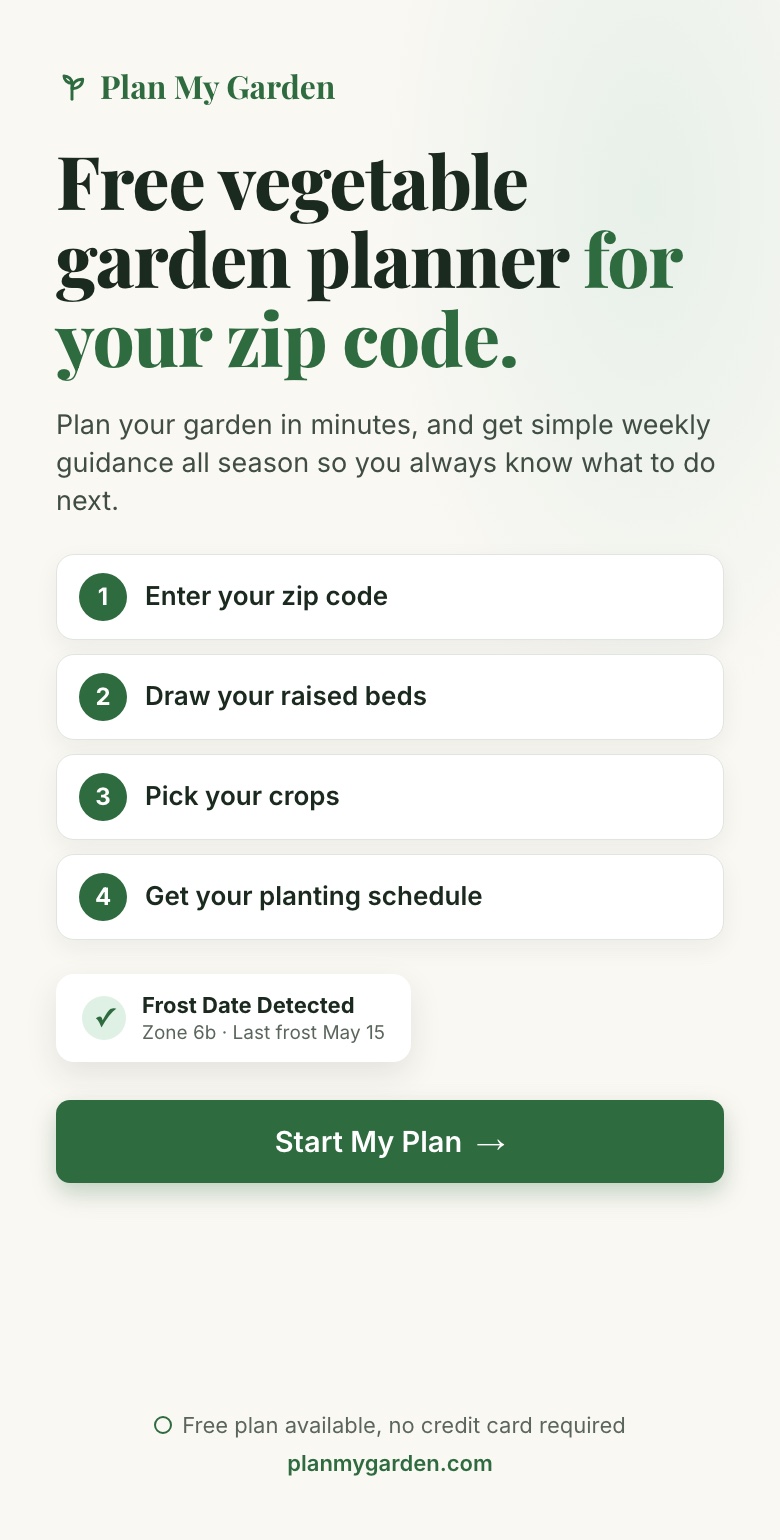
A stocky seedling still needs to go out at the right time. Enter your zip code on Plan My Garden and it finds your frost dates. Plan My Garden is free to start: enter your zip code, draw your beds, pick tomatoes, peppers and everything else you start indoors, and it places each plant at square-foot spacing and builds a planting schedule (start indoors, transplant and direct sow dates) from your frost dates.
Related: How to Start Seeds Indoors in 10 Easy Steps · How to Use Soil Blocks · DLI Calculator · Seed Starting Calendar · Seed Germination Temperature Chart