Last Updated on September 18, 2026
Salsa Garden Layout: Tomatoes, Tomatillos, Peppers, Onions and Cilantro in One 4×8 Bed
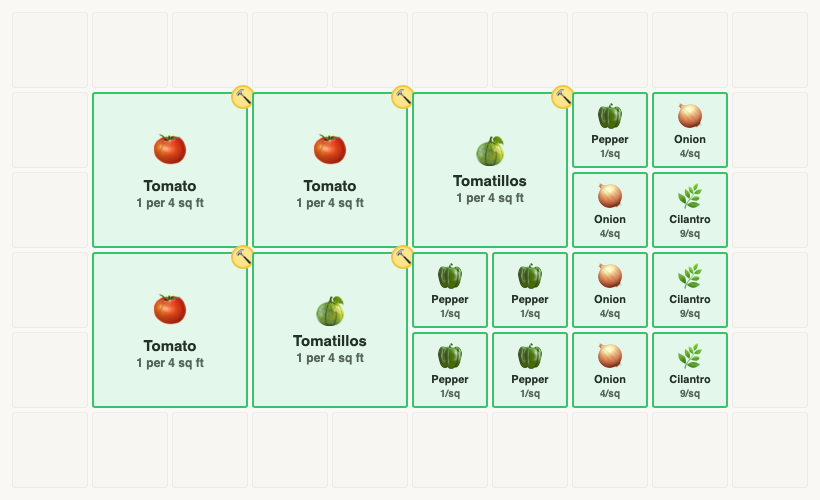
A 4×8 raised bed is 32 square feet, and this layout gives every square to five salsa crops: three tomatoes and two tomatillos on 2×2 blocks at the west end, five peppers, four onions and three squares of cilantro filling the east end. That is 3 tomato, 2 tomatillo, 5 pepper, 16 onion and 27 cilantro plants, 53 in all. Peppers carry the heat, onions the base, and the tomatillo brings the tang a tomato-only salsa does not have.
What goes in each square
Read the plan from west to east, the way the planner filled it. Every square in this bed is used, none left empty.
| Crop | Squares | Per square | Plants |
|---|---|---|---|
| Tomato | 12 | 1 per 4 squares | 3, staked or caged |
| Tomatillo | 8 | 1 per 4 squares | 2, staked or caged |
| Pepper | 5 | 1 | 5 |
| Onion | 4 | 4 | 16 |
| Cilantro | 3 | 9 | 27 |
| Total | 32 | 53 |
Tomato, pepper and onion match the square foot gardening chart exactly. Cilantro is the one that needs a note: the chart lists it at 1 to 9 per square, and my cilantro per square foot page explains why, 9 per square is for leaf cilantro, cut young, while 1 per square is for a plant left to flower for coriander seed. The planner uses 9, the leaf number, which is what this bed is built for. Tomatillo has no chart entry of its own; the planner spaces it exactly like an unpruned tomato, one plant per 2×2 block on a trellis, since both are sprawling, heavy plants that set fruit better staked up.
Why the crops sit where they do
The planner claims 2×2 blocks for tomato and tomatillo before it places anything else, working column by column from the northwest corner. The west two columns of this bed, four squares wide and four deep, go entirely to tomato: two blocks stacked north to south fill them, and a third tomato block starts the next column pair over. That leaves one open block in that same column pair, which goes to tomatillo, plus a second tomatillo block one column pair further east. Both crops carry the trellis icon in the diagram because both climb on a stake or cage in the planner’s data.
Everything left over fills what remains, tallest crop first. Peppers, at an average height of about 36 inches in the planner’s plant data, take the two open squares beside the second tomatillo block, then the first open square in the next column east. Onions, at about 24 inches, take the rest of that column and spill into the next. Cilantro, the shortest crop in the bed at around 10 inches, finishes the last column so nothing tall ends up shading it.
Why this bed uses two tomatillo plants, not one
Tomatillos are self-incompatible. University of Minnesota Extension says to grow more than one plant for best fruit set, with cross-pollination between two plants, ideally two different varieties, setting the fruit. A single tomatillo plant can flower for weeks without setting much of anything if there is no second plant nearby for bees to carry pollen between. The Plan My Garden planner gives each tomatillo plant its own 2×2 block, the same footprint it gives a tomato, and this layout reserves two of those blocks so the bed has a pollination partner built in. Tomatillos also sprawl to about 3 feet wide left unstaked, more than a 2×2 block allows, which is why both plants here carry the trellis icon and want a cage or stake to stay inside their square footage.
How the harvest windows line up
Days to maturity, from the planner, sort the harvest into three waves. Cilantro is first and shortest, 50 days from a direct sow date that falls before your last frost, so it is often cut and replaced before the frost-tender crops even go into the ground. Tomatillo and pepper mature next to each other, both 75 days from transplants set out 1 to 3 weeks after frost, so they come ready around the same point in the season. Tomato, at 80 days from a transplant date a little later than pepper’s, follows close behind. Onion is the slow one, 100 days from a transplant that goes in before your last frost, and it is still filling its squares while the tomatoes, tomatillos and peppers are already producing.
When to plant them, counted from your last frost
These are the windows the Plan My Garden planner uses for every crop in this bed, in weeks from your average last spring frost. Put your date into the seed starting calendar to turn them into dates, or look up your frost dates by zip code on Plan My Garden’s frost date page.
| Crop | Start indoors | Transplant out | Direct sow | Days to maturity |
|---|---|---|---|---|
| Tomato | 5 to 3 weeks before | 2 to 3 weeks after | n/a | 80 |
| Tomatillo | 8 to 6 weeks before | 1 to 2 weeks after | n/a | 75 |
| Pepper | 6 weeks before | 2 to 3 weeks after | n/a | 75 |
| Onion | 12 to 11 weeks before | 4 to 2 weeks before | n/a | 100 |
| Cilantro | n/a | n/a | 4 to 1 weeks before | 50 |
The before and after split follows frost tolerance. The planner rates onion and cilantro semi-hardy, and both go in before your last frost. Tomato, tomatillo and pepper are rated tender, and all three wait until after it. Cilantro also bolts fast in heat, so it does best sown in that cool window before frost-tender crops need the light.
Build this bed in Plan My Garden
Plan My Garden is free to start: enter your zip code, draw a 4×8 bed, pick tomatoes, tomatillos, peppers, onions and cilantro, and it places each plant at square-foot spacing and builds a planting schedule, with start indoors, transplant and direct sow dates, from your zip code’s frost dates.
Seed for this bed
Wood Prairie Family Farm sells certified organic seed from its family farm in Maine, and it carries four of the five crops in this bed: tomatoes, peppers, onions and cilantro. It does not carry tomatillo seed, so start that one from a starter plant or another seed source. Code PMG5 takes 5 percent off. Buying through these links supports this site at no cost to you.
Quick questions
How many plants fit in this salsa garden layout?
This 4×8 bed holds 53 plants across five crops: 3 tomatoes, 2 tomatillos, 5 peppers, 16 onions and 27 cilantro, using all 32 squares.
Why does this salsa garden layout use two tomatillo plants?
Tomatillos are self-incompatible and need a second plant nearby for bees to cross-pollinate and set fruit, per University of Minnesota Extension. The planner gives each tomatillo its own 2×2 block, so this bed reserves two blocks for a pollination pair.
How many pepper plants fit in a 4×8 raised bed?
Up to 32, one per square, if the whole bed were peppers. This salsa layout uses 5 squares for peppers after tomato and tomatillo claim their blocks.
How many onion plants fit in a 4×8 raised bed?
Up to 128 at 4 per square if the whole bed were onions. This layout gives onions 4 squares, 16 plants, enough for a base in a batch of salsa.
What order do the crops in this salsa bed mature?
Cilantro first at 50 days, then tomatillo and pepper together at 75 days, then tomato at 80 days, with onion last at 100 days.