Last Updated on November 4, 2026
How to Make Maple Syrup at Home, Step by Step
To make maple syrup at home, tap maple trees when nights freeze and days thaw, collect the sap and keep it cold, boil it down outdoors in a wide, shallow pan, and finish it at about 7 to 7.5°F above the boiling point of plain water boiled the same day (about 219°F at sea level), confirmed with a hydrometer at 66 to 67 Brix. Filter it hot and bottle it at 185 to 190°F, hot enough to sterilize the jar and cap. Expect to boil about 40 gallons of sap or more for every gallon of syrup: University of Minnesota Extension gives 43 gallons at the average 2 percent sugar, and Penn State says about 43 even for sugar maple, the sweetest species. Each step below links to a page with the detail.
The whole process at a glance
| Step | Key number | Full guide |
|---|---|---|
| 1. Find trees and count taps | At least 10 inches across; one tap until about 18 inches | Taps per tree, trees you can tap |
| 2. Tap at the right time | Nights below freezing, days above | When to tap, how to tap |
| 3. Collect and store the sap | Keep it cold and boil it soon | How long sap keeps |
| 4. Boil it down outdoors | About 43 gallons of sap per gallon of syrup at 2 percent sugar | Sap to syrup calculator, fire ring evaporator |
| 5. Finish it | 7.1 to 7.5°F above boiling water; 66 to 68.9 percent sugar | Finishing temperature, hydrometer correction |
| 6. Filter it hot | Filter while hot, or settle 12 hours and pour off | How to filter |
| 7. Bottle and store | Bottle at 185 to 190°F; refrigerate once opened | Grade your syrup |
Step 1: Find your trees
Sugar maples have the sweetest sap, but other maples and a few other trees work too; trees you can tap for syrup compares them. University of Maine Cooperative Extension says a tree should be at least 10 inches in diameter, measured 4.5 feet above the ground, before you tap it. How many taps per maple tree has the full size chart.
Start small. Penn State Extension, writing for people starting a maple business, recommends starting with a few trees and a small batch of syrup, which is good advice for a backyard first season too.
Step 2: Tap when the sap runs
Sap flows on the thaw after a hard freeze, and Penn State says usable sap may flow for four to six weeks, depending on the weather. When to tap maple trees shows how to read the forecast for a sap run.
The tapping itself is simple: a 5/16-inch hole 1.5 to 2 inches deep, a clean spout tapped in until it’s snug, and a covered bucket. How to tap a maple tree walks through it step by step, including where to drill on a tree that’s been tapped before.
Step 3: Collect the sap and keep it cold
Maine’s guide puts it simply: sap is like milk, and it will sour if left in the sun. Don’t let sap sit in the buckets, especially in warm weather. Keep it in cold storage and boil it as soon as you can. University of Minnesota Extension says that in cold conditions sap keeps one to two days with little loss in syrup quality, and that sap that warms before boiling can make darker, off-flavored syrup. How long can you store maple sap covers keeping it cold without a refrigerator and the signs it has spoiled.
Step 4: Boil it down, outdoors
Boiling is where most of the time goes. Minnesota says sap averages 2 percent sugar, and at that concentration you need 43 gallons of sap for 1 gallon of syrup. Sweeter sap takes less. The maple sap to syrup calculator uses the Rule of 86 to tell you how much syrup your sap will make.
All that water has to leave as steam, which is why the guides say to boil outdoors. Minnesota says to boil sap outdoors or in a well-ventilated area, and Maine warns not to plan on cooking the syrup indoors on the stove without a vent fan or dehumidifier, because boiling sap creates a lot of steam. Maine also says evaporators with more surface area work best, using the example of several catering pans over a cinder block fireplace.
That’s close to what I do. I boil sap from my sugar maples on a concrete-block evaporator I built inside my backyard fire ring, with two flat pans across the blocks and a 3-inch stovepipe chimney at the back. The chimney pulls the fire under the full length of both pans, and the sap gets to a rolling boil quickly. How to build a cheap evaporator on a fire ring has the full build.
A few rules keep the pan from scorching. Maine says not to fill the pan to the top, to keep the sap at least 1.5 inches deep or it may burn, and to keep adding sap as it boils down. Utah State suggests 1 to 1.5 inches for efficiency; stay at 1.5 or deeper and watch the pan. You can pour cold sap straight into the boiling pan, though Maine notes that preheating it is more efficient. Maine also says never to leave boiling sap over a wood fire unattended, because it can boil away and burn the pan, and to keep a little butter or vegetable oil handy: a few drops calm the foam when the pan starts to boil over. Utah State’s guide to producing maple syrup says that once the liquid is golden brown and approaching 217 to 219°F, it can be strained and moved to a smaller pan to finish reducing indoors. That last stretch still gives off steam, so run the stove’s vent fan, as Maine advises, and move hot pans slowly.
Step 5: Finish it at the right density
Finishing is the step that decides whether your syrup keeps. Minnesota says finished syrup boils at 7°F above the boiling point of water, Maine says 7.1°F, and Penn State says about 7.5°F; that’s about 219°F at sea level. The higher end guards against thin syrup. Your boiling point changes with altitude and the weather, so boil plain water the same day and add 7.1 to 7.5 to that reading; maple syrup finishing temperature has a calculator for it. Minnesota says to control the heat carefully as you get close, to prevent burning and overheating.
A thermometer gets you close. A hydrometer confirms it. Penn State says maple syrup has to be at least 66 Brix, or 66 percent sugar, measured at 60°F, to meet the legal definition. Maine explains why both ends matter: syrup below 66 percent sugar can ferment or grow mold over time, and syrup boiled above 68.9 percent can form sugar crystals in the bottom of the container. I finish my syrup indoors on the stove, where I can control the temperature, and check it with a hydrometer. A hot test cup reads differently from a cold one, so use the hydrometer temperature correction chart.
Step 6: Filter it while it’s hot
Finished syrup carries a gritty mineral sediment called sugar sand, or niter. Maine says to filter the syrup while it’s still hot through clean wool or Orlon filter material from a maple equipment dealer. Without a filter, let it settle in a container for 12 hours or more and carefully pour the clear syrup off the sediment, then reheat it to about 180°F, and no higher than 195°F, before bottling. How to filter maple syrup covers filter types, cloudy syrup and cleaning the filters.
Step 7: Bottle it hot and store it
Maine and Penn State give 180 to 190°F for bottling, Utah State 179 to 190°F, and Minnesota says above 185°F, preferring 190°F, so the heat sterilizes the container. Aim for 185 to 190°F and you’re inside every guide’s range. Maine says to pour the hot syrup into sterilized canning jars and seal them, filled full so very little air is left, and that hot-packed syrup at the right density needs no water bath. Penn State says the containers should be at room temperature so the hot syrup doesn’t break them. Minnesota says to lay the filled, capped containers on their side so the hot syrup sterilizes the cap, then store them in a cool, dry place once they cool.
Maine says an opened container has to be refrigerated. If mold forms on syrup that has been stored for several months, Maine says to throw it out, because a micro-organism that can cause foodborne illness may be present.
Hold a bottle up to the light to see what you made: the maple syrup grades chart explains the four color classes and why late-season syrup runs darker. If you have extra, maple candy, cream and sugar temperatures shows how to take it further.
What you need
- Trees, a drill with a 5/16-inch bit, spouts and covered buckets or bags (see how to tap a maple tree).
- Food-grade containers to store sap cold.
- A wide, shallow pan or two and a heat source outdoors: an evaporator, an outdoor gas burner or a fire ring with blocks.
- A candy thermometer, a syrup hydrometer and a test cup.
- Filter material, and bottles or canning jars.
My evaporator post lists the items I use.
Plan the garden while the sap boils
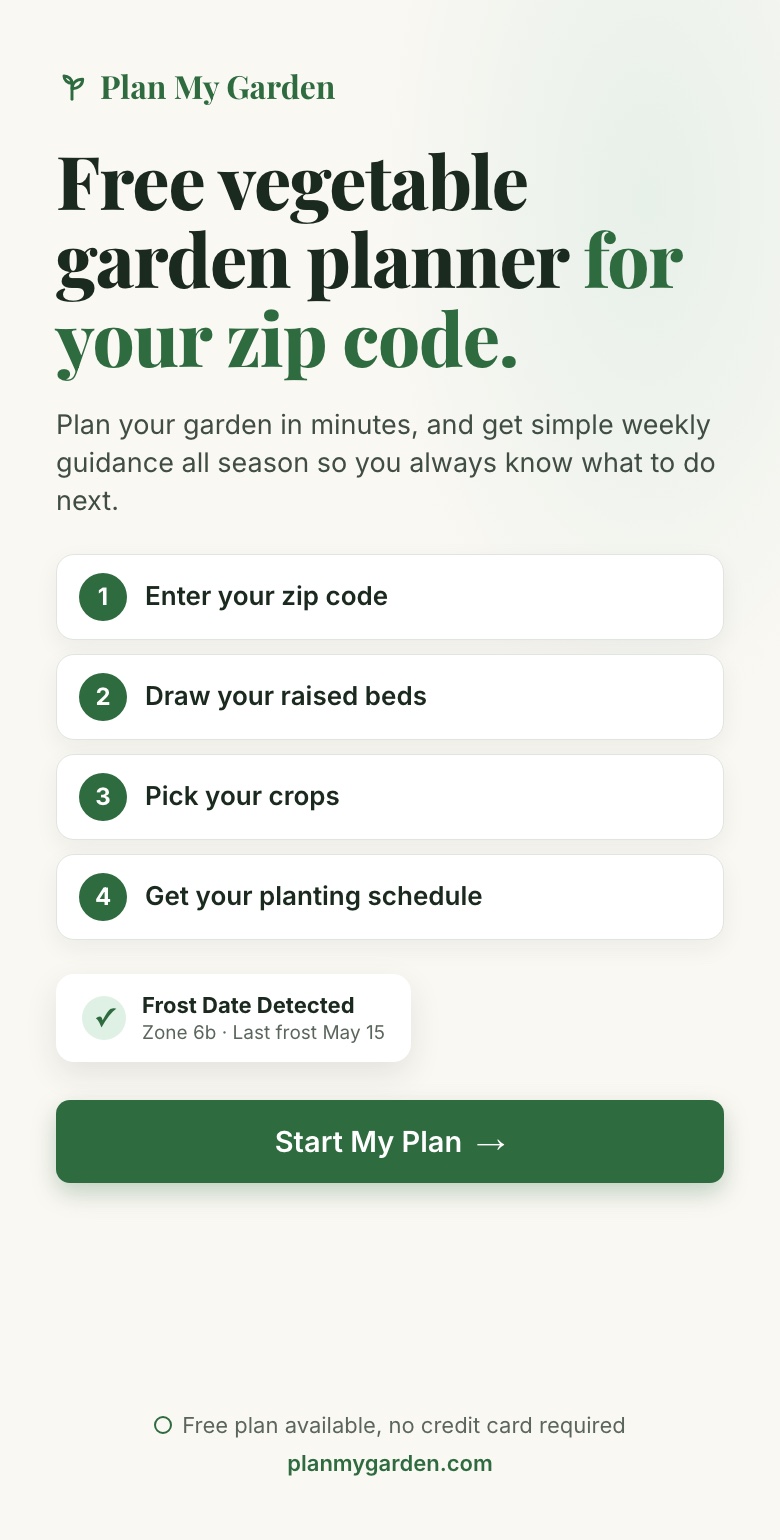
Boiling sap means hours by the fire, and that’s a good time to plan the garden. Plan My Garden is free to start: enter your zip code and it finds your frost dates, draw your beds, pick your crops, and it places each plant at square-foot spacing and builds a planting schedule (start indoors, transplant, direct sow) from those frost dates.
Quick questions
How much sap does it take to make a gallon of maple syrup?
About 43 gallons at the average 2 percent sugar, according to University of Minnesota Extension, and Penn State says about 43 even for sugar maple, the sweetest species. Sweeter sap takes less. Divide 86 by your sap’s sugar percent for your own number, or use the sap to syrup calculator.
Can you boil maple sap indoors on the stove?
Not the bulk of it. Boiling sap makes a lot of steam, and University of Maine Extension says not to cook syrup indoors on the stove without a stove vent fan or a dehumidifier. Boil outdoors. Utah State Extension has you move nearly finished syrup to a smaller pan to finish indoors, which still gives off steam, so run the vent fan and watch for scorching.
What temperature is maple syrup done?
About 7.1°F above the boiling point of water, per University of Maine Extension (Minnesota rounds to 7 and Penn State says about 7.5), roughly 219°F at sea level. Boil plain water the same day for your starting point, and confirm with a hydrometer at 66 to 67 Brix.
How long does homemade maple syrup last?
Properly packaged syrup can last many years unopened, according to Utah State Extension, and Minnesota says to store it in a cool, dry place. Refrigerate it once opened. University of Maine Extension says to throw out syrup that grows mold, and Utah State says to watch for off colors and tastes.