Last Updated on October 23, 2026
Why Garlic Did Not Form Bulbs (Single Rounds and Small Heads)
Garlic that grows one solid bulb with no cloves, called a round, or only a small head, usually comes down to too little cold, too small a clove, or a rough growing season. Iowa State University Extension names three causes for rounds: cloves that were too small, planting in late spring, and poor growing conditions during the season. Most of the fixes are planting decisions, so they happen next fall: plant the biggest cloves of a type suited to your winter, in fall, 2 to 3 inches deep and 6 inches apart. The rounds you already dug are not wasted. Replant them whole and they usually grow into a full head.
Diagnose it: what you see, the cause, the fix
Find the row that matches your harvest. Sources are linked in the sections below.
| What you see | Likely cause | Fix next season |
|---|---|---|
| Single rounds or tiny heads from cloves planted in spring | No winter chill. Cloves need 1 to 2 months at 32-50°F to make a bulb (Nebraska) | Plant in fall, timed to your zip code’s frost date |
| Rounds or small heads from a fall planting, plants on the small side | Cloves too small (Iowa State, Maine) | Plant only the biggest cloves and eat the small ones |
| Rounds or small heads from grocery store garlic or a variety from a warm climate | A type not adapted to your conditions (Nebraska) | Buy seed garlic: hardneck for cold winters, softneck for mild ones |
| Tops winter-killed, or slow weak spring growth and small heads, after a fall planting timed wrong | Planted too early, so tops grew and winter-killed, or too late, so roots did not grow before the ground froze (Nebraska) | Time fall planting to your zip code’s frost date |
| A solid bulb that has not split into cloves yet | Dug too early (Nebraska, Minnesota) | Dig one test plant first and wait if it has not split |
| Small heads where plants were set close together or weeds were thick | Crowding or weed competition (Maine, Utah State) | 4 cloves per square foot, 6 inches apart; mulch and pull weeds while small |
| Small or irregular heads after a dry spring, or misshapen heads in heavy clay or packed soil | Dry soil, or weak, packed soil (Nebraska, Iowa State, South Dakota State) | About 1 inch of water a week; loosen the soil and work in compost before planting |
| Hardneck heads small, scapes left on | The scape took energy from the bulb (Maine) | Cut the scapes |
Planted in spring: no cold, no cloves
This is the most common reason for rounds. Dormant cloves and young plants need 32 to 50°F for one to two months before they will form a bulb, which is why garlic goes in during fall or very early spring, and that same cold is what splits the bulb into separate cloves (Nebraska Extension, South Dakota State University Extension).
Spring planting has a second problem: time. A spring-planted clove cannot grow enough foliage before bulbing starts to support a large bulb, since the plant stops making new leaves once bulbing begins and head size depends on how much leaf growth came first (University of Maryland Extension, Nebraska Extension). A spring clove runs into long summer days with only a few leaves behind it.
Hardneck garlic depends on the cold most. My How to Grow Garlic guide says it needs to be exposed to a freeze to produce larger bulbs. Softneck can be spring-planted with more success, especially artichoke types, which need winter cold the least (Nebraska Extension, Wisconsin Horticulture).
A few more details worth knowing
Break the bulbs apart the day you plant, not days ahead; separating cloves early decreases yields (Nebraska Extension). Keep the biggest cloves for the bed and send the small ones to the kitchen. Grocery store garlic is often treated with growth inhibitors that can keep it from sprouting well, and it is rarely the type suited to your winter, so buy seed garlic instead (my How to Grow Garlic guide). Plant 2 to 3 inches deep, pointed end up, to the base of the clove, not so deep the soil hampers the bulb or so shallow that rain washes cloves out (Nebraska Extension, University of Minnesota Extension). Bed-by-bed depth and mulch are in How to Plant Garlic in Raised Beds.
Small heads from a good planting
If the timing and cloves were right, look at the growing season: crowding, weeds, dry soil, heavy or packed soil, and scapes left on hardnecks all cut bulb size (University of Maine, Utah State University Extension, Nebraska Extension, Iowa State Extension, South Dakota State University Extension). I plant 4 cloves per square foot, 6 inches apart; bed counts are on How Many Garlic per Square Foot and the seed math is in How Much Garlic to Plant. Mulch and pull weeds while they are small, water about an inch a week, loosen heavy soil with compost before planting, and cut the scapes; how and when is in Garlic Scapes: What They Are and When to Harvest Them. Leaving a hardneck’s scape on can reduce the harvested bulb by as much as 48 percent (University of Maine).
Check one plant before you dig the bed
Sometimes garlic that looks like it did not bulb was just dug too soon. University of Minnesota Extension says harvesting too early results in small bulbs. Its test: pull a few bulbs and cut them in half, and if the cloves fill the skins, the bulbs are ready. Nebraska Extension uses the same check: when the lower third of the leaves are yellow, dig a few plants, and if the bulbs have not yet segmented into cloves, leave the rest for a week or two and check again. I watch the bottom two leaves, and when they turn brown, the bulbs are ready.
What a garlic round is, and how to turn it into a full head
A round is a single, solid bulb with no separate cloves. Iowa State calls them unsegmented bulbs. They also grow on purpose from the bulbils on top of a hardneck scape, which is the slow way to multiply garlic.
Do not throw rounds away. Replanted whole for a second year of growth, a round usually develops into a normal full-sized bulb, which matches what my scapes post says about rounds grown from bulbils: replant one and the year after you get a proper divided bulb (Nebraska Extension). Cure and store the rounds with your seed garlic, as in Harvesting and Curing Garlic, and plant each one whole in fall with your cloves. If you would rather eat them, you can; the entire garlic plant is edible in all stages (University of Alaska Fairbanks Cooperative Extension).
Video: 7 garlic planting mistakes that shrink your bulbs
Most small heads trace back to planting day. In this video I walk through the planting mistakes behind them, including planting too early or too late, the wrong garlic for your winter, crowding and depth, mulching too soon, and waiting too long to buy seed garlic.
Plant this fall so it bulbs next summer
- Pick seed garlic for your winter: hardneck for cold, softneck for mild.
- Plant in fall, timed to your zip code’s frost date. Garlic takes about 240 days from planting to harvest (the Plan My Garden planner). Look up your first fall frost by zip code, and read When to Plant Garlic on the Plan My Garden blog for the exact timing, including mild winters.
- Split the bulbs the day you plant and plant the biggest cloves pointed end up, 2 to 3 inches deep, 4 per square foot. Water them in.
- Mulch. University of Minnesota covers garlic beds with 3 to 4 inches of leaf or straw mulch to even out winter temperatures and help control weeds. I use leaf mulch.
- In spring: pull weeds while small, water about an inch a week, cut the scapes, and test one bulb before you dig the bed.
Where to get big seed cloves
Big cloves start with big bulbs. Wood Prairie Family Farm, where I get seed garlic, lists Music as a porcelain-type hardneck with 5 to 8 large cloves per bulb, and German Extra-Hardy as a porcelain-type hardneck with 3 to 5 huge cloves. Code PMG5 takes 5 percent off, and buying through these links supports this site at no cost to you.
Quick questions
Why did my garlic grow one big clove instead of a bulb?
That single solid bulb is called a round. Iowa State University Extension says rounds come from cloves that were too small, planting in late spring, or poor growing conditions. Replant the round whole in fall and it usually grows into a full head the next summer.
Can you eat garlic rounds?
Yes. University of Alaska Fairbanks Cooperative Extension says the entire garlic plant is edible in all stages. You can also replant them for a full head next year.
Will garlic planted in spring form bulbs?
Usually poorly. Wisconsin Horticulture says most varieties planted in spring produce weak shoots and poorly developed bulbs unless they got a proper cold treatment first. Artichoke types need winter cold less, and spring planting should be as early as possible.
Why are my garlic bulbs so small?
Check the clove size, the planting time and the season. Small cloves, crowding, weeds, dry soil, heavy soil and scapes left on hardnecks all cut bulb size, and garlic dug too early has not finished filling out.
Does cutting garlic scapes make bigger bulbs?
Yes, on hardneck garlic. University of Maine research found that leaving the scape on can reduce the harvested bulb by as much as 48 percent.
Plant at the right time next fall
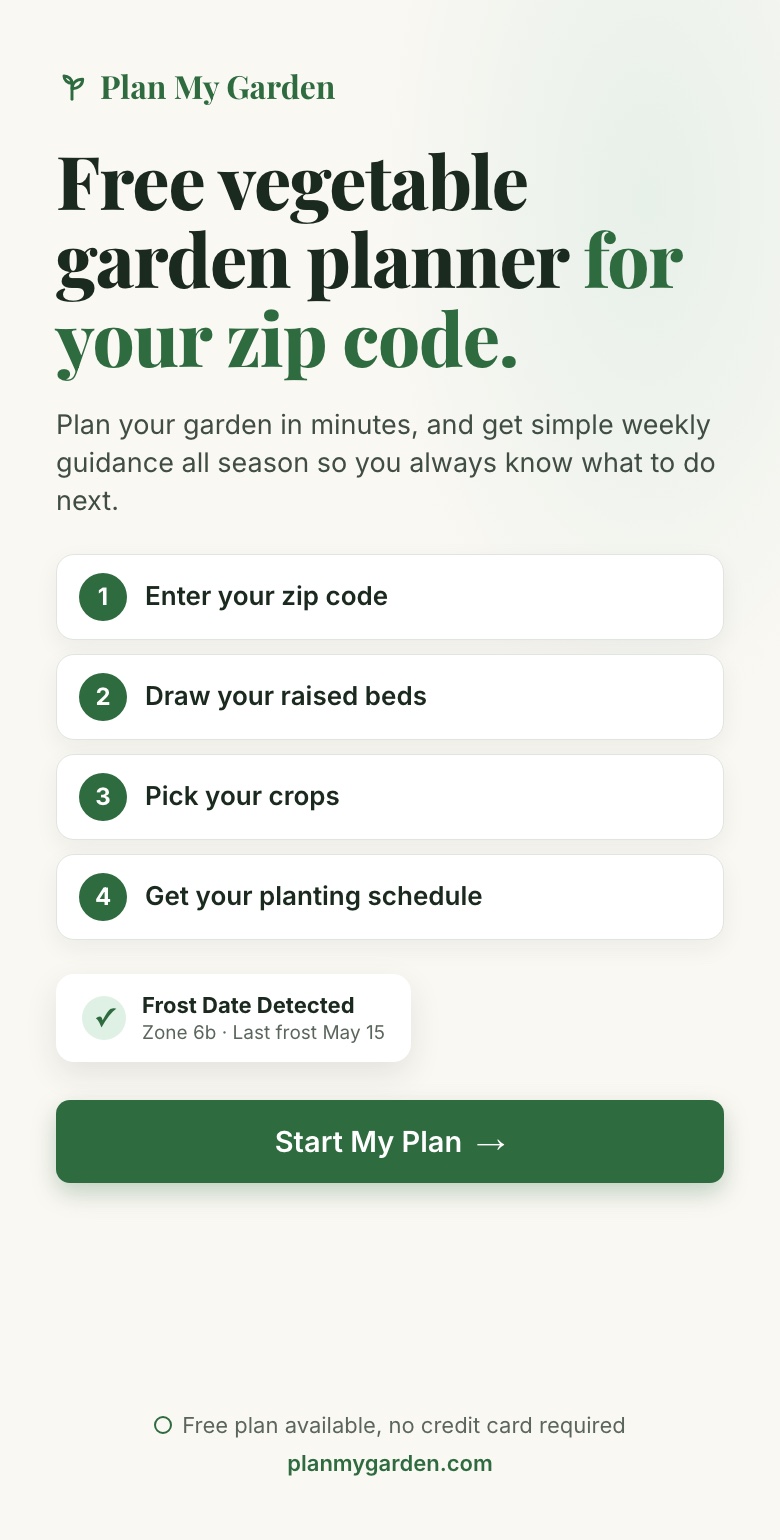
Most rounds trace back to when and what you planted, and the planner handles the when. Plan My Garden is free to start: enter your zip code and it finds your frost dates, draw your beds, pick garlic and everything else you want to grow, and it places each plant at square-foot spacing and builds a planting schedule from your frost dates.
Related: How to Grow Garlic · How to Plant Garlic in Raised Beds · How Much Garlic to Plant · How Many Garlic per Square Foot · Harvesting and Curing Garlic