Last Updated on September 13, 2026
How To Grow Squash Vertically
How to Grow Squash Vertically: Maximizing Your Garden Space
In this quick blog post, you are going to learn how to grow squash vertically. Gardening is not just a hobby; it’s an art form that allows us to connect with nature while producing delicious, home-grown foods. One of the challenges many gardeners face, especially those with limited space, is how to grow bountiful crops in small areas. Tim from Organic Backyard Gardening developed the Plan My Garden planner and has helped thousands of gardeners plan their gardens. He shares an invaluable tip in his video tutorial, demonstrating the effectiveness of vertical gardening, specifically with butternut squash. This blog post expands on Tim’s insights, offering a comprehensive guide on growing squash vertically, and making the most of every inch of your garden.
Introduction to Vertical Gardening
Vertical gardening is an innovative approach that uses upright structures to support plant growth. This method is not only space-efficient but also beneficial for plant health, facilitating better air circulation and reducing the risk of soil-borne diseases. When it comes to vining plants like cucumber and beans, vertical gardening opens up a realm of possibilities, allowing for higher yields in smaller plots.
Choosing the Right Squash Variety
Although not all squash varieties necessitate the use of trellises, opting for vertical gardening can significantly enhance space efficiency, especially for those with limited garden area. While there are bush-type squashes that naturally maintain a compact form, requiring minimal support, vining squashes present a unique opportunity for those looking to optimize their garden’s layout. Growing vining squash varieties vertically not only conserves precious garden space but also brings additional benefits such as improved air circulation and easier pest management. However, it’s important to note that unlike some other climbers, squash plants lack tendrils, which means they won’t naturally cling to supports. Therefore, when you choose to grow squash vertically, be prepared to gently train and secure the vines to your chosen structure to ensure they grow in the desired direction and remain supported throughout the season. This approach requires a bit more hands-on effort but can lead to a rewarding harvest from a beautifully organized vertical garden.

Starting Squash Seeds Indoors
Tim recommends starting squash seeds indoors two weeks before the last expected frost. This head start is crucial for extending the growing season, especially in regions with shorter summers. Use biodegradable pots to minimize root disturbance during transplanting, and ensure your seedlings receive plenty of light to prevent legginess.
Preparing the Garden Bed To Grow Squash Vertically
A spacing of 4 square feet is ideal for growing squash vertically. See our square-foot gardening chart here. Before planting, enrich the soil with compost to provide the necessary nutrients for healthy growth. Consider the positioning of your raised bed to ensure it receives adequate sunlight, essential for fruit development.
Setting Up Vertical Supports for Squash
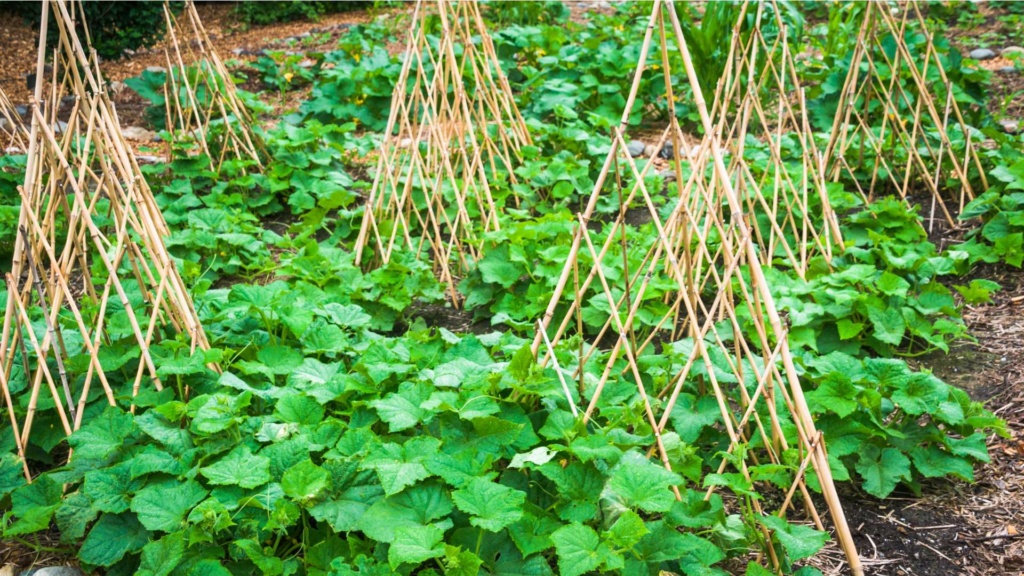
The key to successful vertical gardening lies in the support structures. For growing squash, sturdy trellises, fences, or stakes can be used to guide the vines upward. Ensure your supports are securely anchored to withstand the weight of the plants and fruits. Tim’s method of utilizing a nearby fence for support is a practical and space-efficient solution.
Planting and Training Squash Vines
Transplant your squash seedlings into the garden bed about one week after the last expected frost, spacing them to allow for ample growth. As the vines develop, gently guide them onto the supports, using soft ties if necessary to encourage upward growth. Regularly check the plants to ensure they are securely attached to the structure.
Caring for Your Squash Plants
Proper care is essential for yielding a bountiful harvest. Water the plants deeply and consistently, focusing on the root zone to encourage deep root development. Mulching around the base of the plants can help retain soil moisture and suppress weeds. Regular monitoring for pests and diseases will allow you to address any issues promptly, ensuring the health of your squash plants.
Plan your vegetable garden free, in minutes
Enter your zip code, draw your beds, pick your crops, and get a personalized planting schedule for your exact location. Free to start, no guesswork.
Harvesting and Storage
Monitor your squash for signs of maturity, such as hardening of the skin and deepening of color. Harvesting at the right time ensures the best flavor and storage quality. Use a sharp knife to cut the squash from the vine, leaving a few inches of stem attached. Store your butternut squash in a cool, dry place to extend its shelf life, allowing you to enjoy your harvest well into the winter months.

Planning for Next Year
As the gardening season draws to a close, it’s the perfect time to reflect on what worked well and what can be improved. Consider adding organic compost to your soil to maintain soil health. Tim’s advice to start planning next year’s garden early is invaluable; with careful planning and creativity, you can continue to expand and enhance your garden’s productivity.
How To Grow Squash Vertically Conclusion
Vertical gardening is a game-changer for those looking to maximize their garden’s output, especially when space is at a premium. By following the tips shared by Tim and expanding upon them with diligent care and planning, you can transform even the smallest garden into a prolific source of delicious squash.
Wrapping Up
Remember, every garden has its unique challenges and opportunities, so experiment with different techniques and varieties to discover what works best for you. Happy gardening, and don’t forget to check out Tim’s other videos for more gardening inspiration and advice.
And for those planning their spring garden, check out PlanMyGarden, which makes garden planning simple. Enter your ZIP code, draw your garden layout, and select what vegetables to grow. You get a planting schedule and optimal plant placement in minutes, free to start. Pro adds grow guides and PDF export.
Stay tuned for our next post, and happy gardening!
Supplies: trellis netting (Amazon). Affiliate links; buying through them supports this site at no cost to you.